the incorruptibles
The Catholic Church preserves the bodies of several canonized saints whose biological tissues have resisted normal post-mortem decomposition without artificial embalming, mummification, or favorable environmental conditions.
Biological Differentiation: Natural vs. Incorrupt States
Natural Mummification: Requires dry, arid, well-ventilated environments, resulting in hard, desiccated, chalky organs.
Authentic Incorruption: Occurs in damp, dark, humid conditions, with tissues remaining soft, flexible, and hydrated decades later.
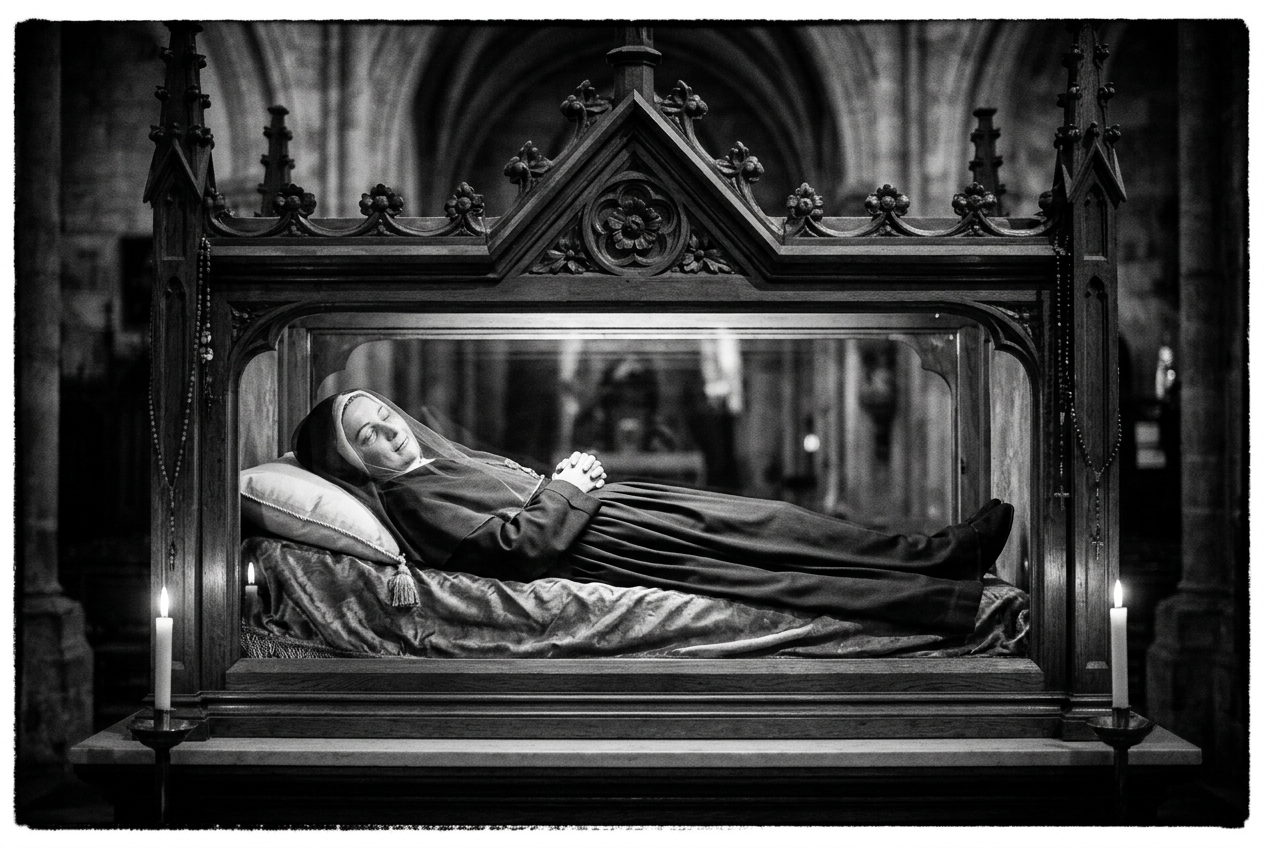
Medical Examination of St. Bernadette Soubirous
St. Bernadette died in 1879 at age 35 and was buried in a damp underground vault at the Convent of Saint-Gildard in Nevers, France. Humidity in the vault was high enough to rust iron rosary beads and corrode brass crucifixes buried with her.
Upon exhumation in 1909, 1919, and 1925, medical doctors under oath examined her body:
1909 Examination: Doctors David and Jourdan noted that the body showed no putrefaction or odor.
1925 Examination: Dr. Comte performed a surgical inspection of her internal organs. He noted that her liver remained soft, elastic, and normal in consistency 46 years after her death—a biological anomaly impossible under normal subterranean conditions.
Facial Wax Mask: To prepare her body for public display after post-exhumation skin discoloration occurred, a light wax mask was placed over her face and hands. The wax mask is an aesthetic covering; it does not account for the preserved internal organ structure documented by medical examiners.
Additional Historical Case Studies
St. John Vianney (d. 1859): Exhumed in 1904, his heart and internal organs remained preserved.
St. Andrew Bobola (d. 1657): Buried in a damp Polish crypt, his body remained flexible and soft when exhumed decades later.